
The Future of Out-of-Home Entertainment: How to Launch a High-ROI Location-Based VR (LBVR) Startup
1. What is Location-Based VR (LBVR) and Why is it Booming?
In the commercial entertainment sector, Location-Based VR (LBVR)—also known as arena-scale VR or free-roaming VR systems—refers to dedicated physical venues where multiple players can move freely in a shared virtual environment.
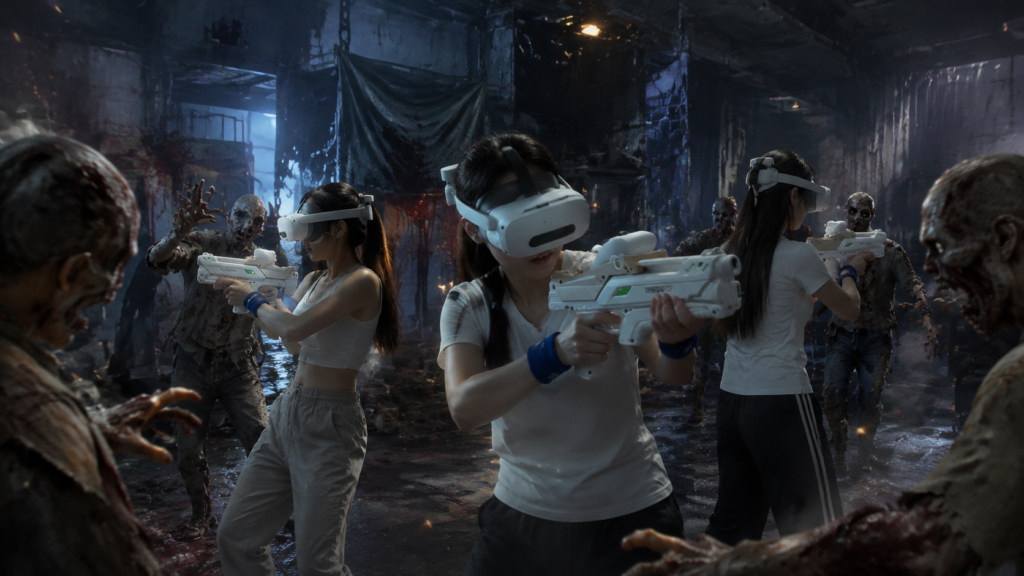
Unlike home-based VR, which is limited by residential space and consumer-grade hardware, LBVR offers premium, hyper-immersive social experiences utilizing tactical haptic gear, untethered movement, and custom prop weapons. This massive contrast between home tracking and commercial tracking makes it a highly resilient consumer draw for shopping malls and entertainment districts.
2. Hardware Architecture: Moving from Heavy Backpacks to Wireless Freedom
Early-generation multiplayer VR tracking systems were an operational and financial bottleneck. Players had to strap on heavy, 12-lb PC backpacks tethered to expensive, external optical motion-capture cameras (like OptiTrack or Vicon). For an operator trying to start a VR arcade, this architecture meant astronomical upfront capital expenditure (CapEx), high hardware failure rates, and constant technical friction.
The modern industry standard has shifted toward Standalone VR Commercial Solutions powered by enterprise headsets (such as the HTC Vive Focus 3 or PICO Business editions) and advanced Inside-out LBVR tracking.
By deploying a wireless VR co-location system paired with specialized Wi-Fi 6E/7 streaming routers, operators can now deliver flawless, low-latency multiplayer tracking without the burden of heavy hardware backpacks.
Key Technical Advantages:
Reduced CapEx: Eliminating backpack PCs and external sensor matrices reduces initial hardware acquisition costs by over 50%.
Operational Simplicity: Fewer moving parts mean fewer hardware failure points during peak business hours, lowering ongoing maintenance overhead.
3. Core Pillars of a Turnkey VR Business Solution
If you are looking to build a viable Sandbox VR alternative or looking into a VR arcade franchise, your tech-entertainment ecosystem must be built on three commercial pillars:
High-Coop, High-Throughput Content
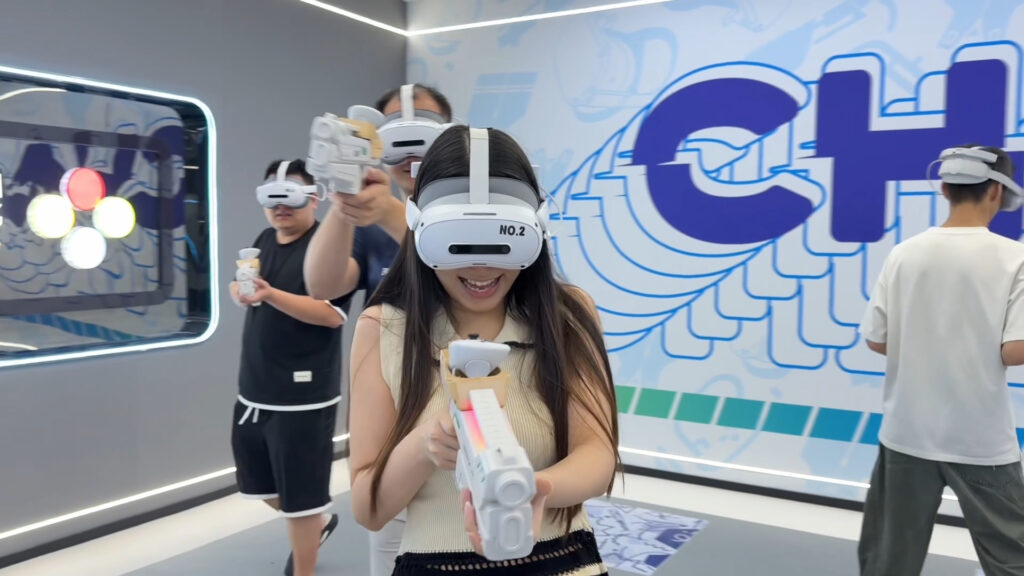
To optimize your unit economics, games must be explicitly engineered for commercial turnover. Commercial VR solutions thrive on multiplayer social dynamics. Your content library needs highly tactical, cooperative (Co-op) content—ranging from sci-fi shooters to immersive escape rooms—optimized for a strict 20-to-30-minute gameplay loop. This ensures a premium guest experience while maximizing your venue’s hourly table turnover rate (throughput).
Enterprise VR Central Management System (CMS)
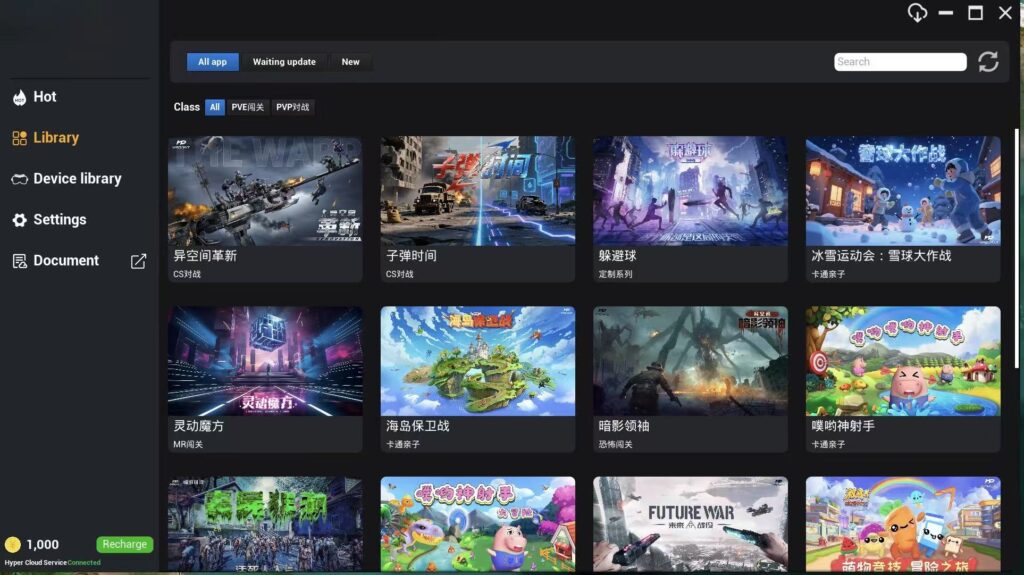
Labor remains one of the highest operational expenditures in retail. A premium LBVR setup relies on a sophisticated VR CMS. Your floor staff should be able to manage multiple tracking cells, monitor headset battery levels, launch games, and troubleshoot latency spikes—all from a single, centralized tablet interface. Minimal staff, maximum throughput.
Automated Viral Marketing via MR Video Capture
The ultimate organic weapon for customer acquisition is an Automated Mixed Reality (MR) Recap System. By integrating a green-screen (Chroma Key) grid into the tracking cell, the backend system seamlessly blends real-world player movements with in-game 3D assets. The moment the game ends, a cinematic trailer is generated and texted to the players. When they share it on TikTok or Instagram, your studio secures high-converting, organic B2C traffic at zero cost.
4. Understanding LBVR Investment ROI & Unit Economics
B2B investors choose location-based entertainment based on one primary metric: yield per square meter.
A standard multiplayer tracking cell requires an efficient physical footprint of roughly $6 \times 6$ to $8 \times 8$ meters. To truly optimize your LBVR investment ROI, premier venues are engineered around a dual-revenue model:
| Revenue Stream | Component | Commercial Purpose |
| Core Revenue | Multi-player VR ticket sales | High-margin, steady baseline income |
| Ancillary Revenue | Food & Beverage (F&B) & Corporate VR Team Building Solutions | Drives up Average Order Value (AOV) and populates weekday bookings |
5. Critical Pitfalls: Overcoming the Retention Trap
The single greatest risk in the VR arcade business is the novelty expiration date. To build a sustainable, recurring revenue engine, operators must implement retention-driven operational SOPs:
Content Cycles: Partner with content studios that refresh titles or push seasonal updates every 3 to 6 months via flexible licensing models.
Gamification: Introduce tiered difficulty modes and local leaderboard systems to incentivize core gamers to return for high-score optimization.
Hygiene Standards: Sweat on headsets will ruin a brand instantly. Invest in commercial-grade UV-C sanitizing stations and quick-dry medical-grade silicone face pads, ensuring equipment is visibly sanitized right in front of the incoming players.
Frequently Asked Questions (FAQ)
How much space do I need to open an LBVR center?
A single standard multiplayer tracking cell requires a clear area of 6×6 meters to 8×8 meters. Including a reception desk, player briefing area, and a small lounge/F&B zone, a highly optimized starter venue can operate efficiently within 150 to 250 square meters.
What is the typical (ROI/Payback Period) for a VR arcade business?
Depending on your real estate costs and local demographics, a well-managed turnkey VR location using wireless standalone hardware typically targets an ROI payback period of 12 to 18 months.
Can I build an LBVR studio without paying high franchise fees?
Yes. Instead of joining a strict VR arcade franchise, you can source turnkey VR business solutions from independent hardware integrators and content developers. This allows you to retain 100% of your brand equity and avoid high monthly royalty fees.
Ready to Scale Your Entertainment Portfolio?
Launching a location-based VR business bridges the gap between digital immersion and real-world physical community, making it highly attractive to premium commercial landlords seeking experiential tenants.
Whether you are looking to invest in an established brand or looking to build a custom multiplayer VR tracking system, our enterprise consulting team is here to help.
Contact us today to request our comprehensive Technical Whitepaper and customized financial projection models for your market.