
The Next Wave of Social Entertainment: How to Build a Location-Based VR Startup
The way we spend our weekends is undergoing a massive paradigm shift.
From traditional movie theaters and karaoke rooms to the more recent craze of escape rooms, younger consumers are constantly seeking real-world, shared social experiences. However, their expectations have never been higher. As traditional entertainment begins to feel repetitive, Location-Based VR (LBVR) is stepping up to take the crown.
As the industry gold standard, Sandbox VR has taken the world by storm with its movie-like immersion, tactical haptic gear, and viral green-screen recap videos.
If you are looking to enter this high-growth tech-entertainment sector and build your own Sandbox VR-style business, how do you turn that vision into reality? Here is your definitive, actionable blueprint to launching an LBVR startup.
1. Hardware Architecture: Heavy vs. Lightweight
Many people still picture location-based VR as the early-generation setup: players running around drenched in sweat while carrying a 12-lb PC backpack. While Sandbox VR initially used this heavy infrastructure to guarantee performance, it is a financial and operational nightmare for early-stage startups.
The Modern Solution: Embrace Lightweight Standalone Systems
With advancements in enterprise-grade standalone headsets (like the HTC Vive Focus 3 or PICO Business editions) and spatial anchor technologies, you can now deploy an Inside-out tracking + Wi-Fi 6E/7 wireless streaming architecture.
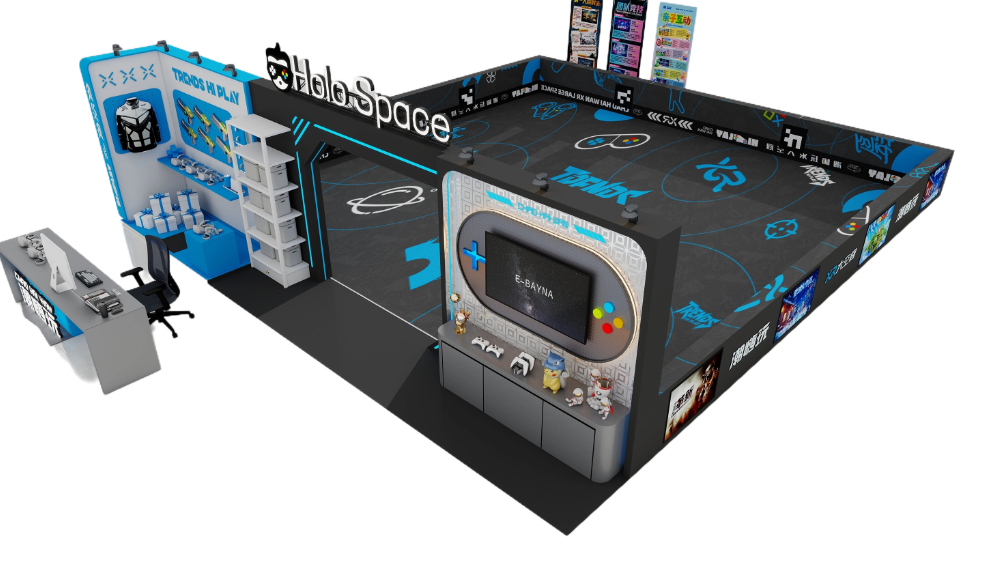
- Spatial Blueprint: A standard gameplay arena (often called a “Sandbox” or “Cell”) should ideally measure between 6×6 meters and 8×8 meters.
- The Advantage: Players only need a lightweight headset and a tracked prop weapon. This cuts your upfront hardware acquisition costs by over 50% and dramatically reduces equipment failure rates and daily maintenance friction for your staff.

2. Content is King, But Social is the Catalyst
While hardware dictates the floor of your user experience, your content and social loop dictate the ceiling of your business.
High-Coop Gameplay
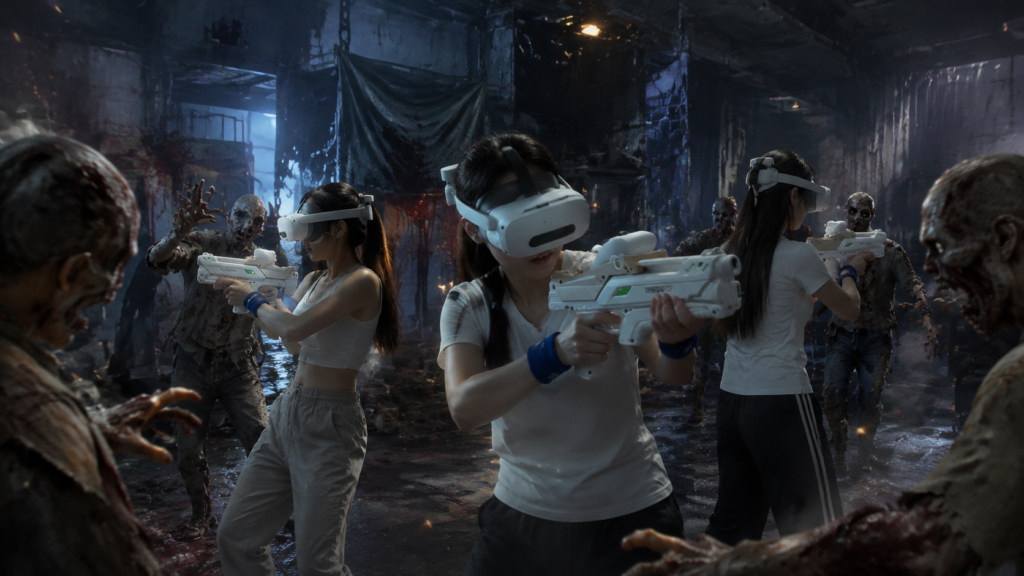
Never port single-player home VR games to a commercial arena. LBVR is fundamentally a social experience. Your content library must focus on highly cooperative (Co-op) gameplay:
- Zombie Survival (Sci-Fi FPS): High adrenaline, perfect for corporate team-building and core gamers.
- Cyberpunk / Space Stations: Visual spectacles with mass appeal across all demographics.
- Immersive Escape Rooms: Heavy on communication, ideal for couples and friend groups.
The Golden Rule: Keep the gameplay loop strictly between 20 to 30 minutes. This is the sweet spot that maximizes player satisfaction while ensuring high throughput (table turnover rate) for your business.
The Secret Weapon: Mixed Reality (MR) Video Capture
Sandbox VR’s greatest marketing masterstroke isn’t the game itself—it’s their viral marketing loop.
By painting the walls of your arena green (Chroma Key), your backend system can overlay the players’ real-world movements onto the 3D in-game environment in real-time. Once the game ends, the system automatically generates a high-octane, 30-second “Hollywood-style” trailer of their session.
When you text this video to your players, 100% of them will share it on Instagram, TikTok, or YouTube. Your customers become your highest-converting, free marketing agency.
3. Retail Economics & Studio Layout
At the end of the day, an LBVR startup is a brick-and-mortar retail business. You need to master the unit economics.
- Location Strategy: High-end shopping malls > Trendy entertainment districts > Next to premium cinemas. LBVR relies on a mix of foot traffic and destination planning. Premium malls bring natural foot traffic, saving you massive digital ad spend.
- Maximizing Yield per Square Meter: Beyond the VR grid, always design a “Decompression / Lounge Area.” After stepping out of the virtual world, players want to sit down, grab a drink, and watch their gameplay replays and leaderboards on big screens. This elevates your average order value (AOV) and transforms a one-time game into a weekend hangout hub.
The 6-Month Launch Roadmap
Launching an LBVR studio requires precise operational pacing:
- Months 1–2 | Financial Modeling & Feasibility:
Calculate your unit economics: equipment depreciation, rent, labor, and game licensing fees. Target a 12-to-18-month ROI per location. - Month 3 | Tech Stack Validation:
Lock in your hardware vendors and content partners. Rent a small warehouse space to stress-test your multiplayer local tracking, ensuring zero drift or disconnects. - Month 4 | Site Acquisition:
Negotiate leases with target premium commercial properties. Pitch your business as a high-foot-traffic driver to secure rent concessions or tenant improvement (TI) allowances. - Month 5 | Buildout & Integration:
Execute the green-screen buildout, install networking infrastructure, and integrate your Central Management System (CMS) for one-click game control. - Month 6 | SOP Training & Soft Launch:
Run rigorous stress tests on equipment charging cycles and employee service workflows. Invite local tech and lifestyle influencers for free VIP previews to ignite local buzz.
Critical Pitfalls to Avoid
- The “One-and-Done” Retention Trap:
VR suffers from a novelty expiration date. To drive repeat visits, you must partner with content studios that refresh games every 3 to 6 months, introduce tiered difficulty levels, or host local competitive tournaments. - Underestimating Hygiene Operations:
Sweat on headsets and smelly facial interfaces will instantly kill your brand’s reputation. Invest in commercial-grade UV sanitizing stations, use quick-dry medical-grade silicone face pads, and ensure equipment is visibly cleaned right in front of the next incoming group.
Final Thoughts
Starting a location-based VR business looks like a technology venture, but it is fundamentally a hospitality and social entertainment business. It takes the digital joy of gaming and anchors it into physical real estate. If you possess a passion for immersive tech combined with sharp retail execution, this remains one of the most lucrative, frontier-pushing entertainment sectors to build in today.